April 30, 2026 | 5 min read
Rules for the Night Archivist
A temporary records clerk learns the basement rules are not there to protect the documents.

Narrated by
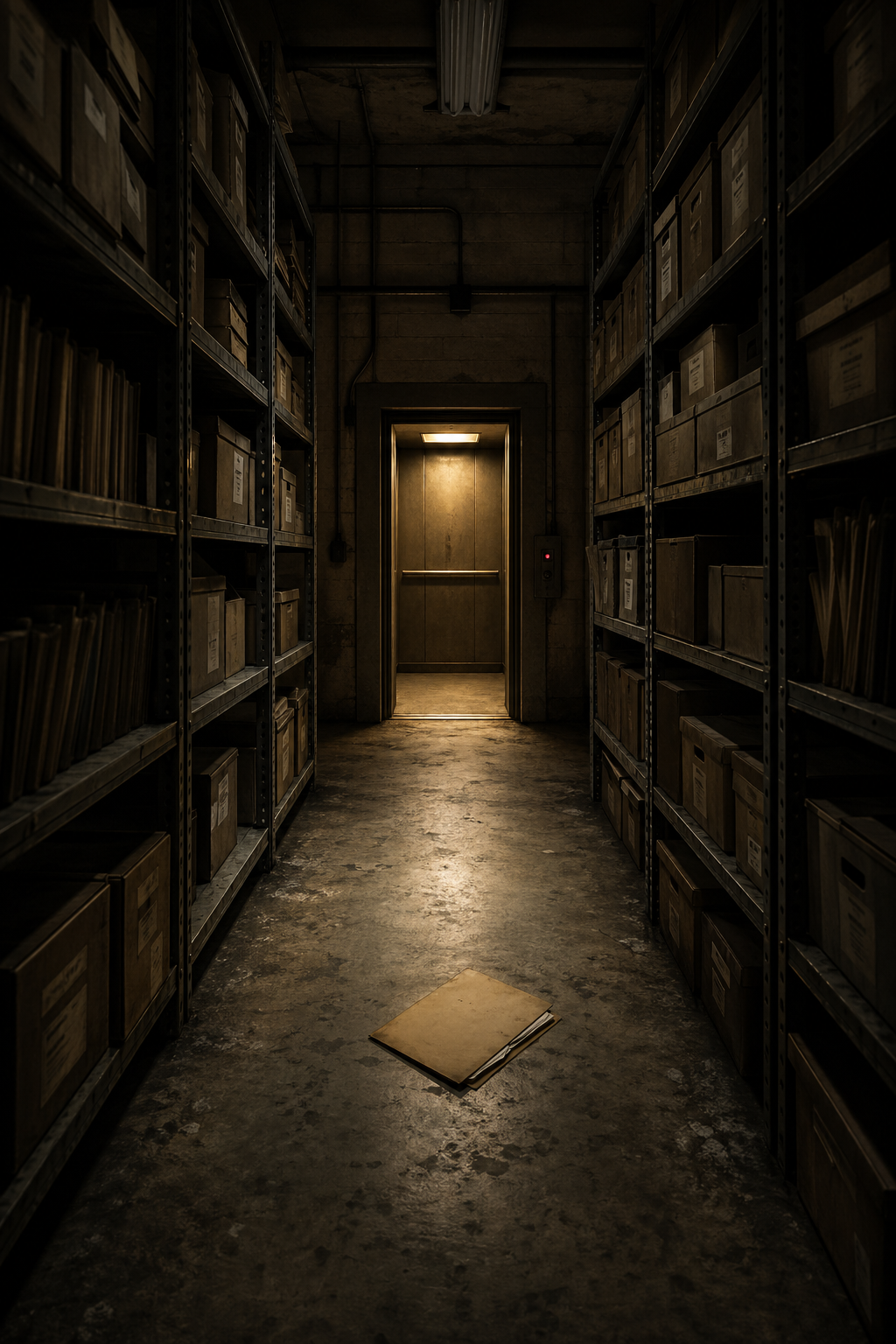
The county archives paid two dollars more per hour for overnight catalog work, which should have told me something before I accepted. On my first shift, the day supervisor walked me down to the basement stacks, handed over a key ring heavy enough to bruise, and slid a laminated card across the desk.
The card listed nine rules. Most were ordinary enough: no food, no ink pens, no shelves left unlocked. Rule Six said if I heard someone crying between Aisles H and J, I was not to investigate because the sound traveled strangely through the vents. Rule Nine said if the service elevator opened on Sublevel Three, I was to shut my eyes until the doors closed again. At the bottom of the card, in smaller type, was a sentence that bothered me more than the rules themselves: Do not answer any question asked as if it already knows you.
I laughed because offices love to mythologize old buildings. The supervisor did not laugh back.
By 12:30 a.m. I had already broken Rule Six. The crying started as a soft, exhausted sound, the kind a child makes after it has given up expecting comfort. I took my flashlight and followed it past land deeds, census ledgers, and one locked cabinet full of police photographs from the seventies.
The sound stopped in Aisle I. A single folder lay on the floor in front of a shelf that should have held tax rolls. My employee number was written on the tab in a handwriting I recognized as my own.
Inside were incident reports dated five years into the future. My name appeared on every page under different job titles. Night janitor. Intake clerk. Deputy registrar. Missing person.
The reports all ended the same way: Subject ignored instruction regarding elevator access. Subject believed the rules were symbolic.
The service elevator bell rang behind me.
I did not turn around. I remembered Rule Nine too late and squeezed my eyes shut so hard my teeth ached. The elevator doors opened with a tired metal groan. Something stepped out dragging one foot. It crossed the concrete at a speed no limp should allow, stopping close enough that I felt damp air pass over my face.
"You filed me wrong," a voice said. It sounded like old cassette tape played through a wet speaker.
A stack of papers touched the back of my hand. They were warm.
"What shelf do the unfinished people go on?" the voice asked. The words were less like a question than an invitation to place it somewhere by speaking.
I kept my eyes closed. The crying began again, directly in front of me now, layered with other sounds underneath: pages turning, nails tapping metal, someone breathing through a split nose.
The elevator doors shut. I waited until the bell rang a second time before opening my eyes.
The folder with my name was gone. In its place sat a fresh laminated card.
Ten rules this time. The last one had been added in red marker.
Rule Ten: If the unfinished person learns your voice, do not answer when you hear yourself calling from the stacks. It will not be asking for directions.