May 1, 2026 | 6 min read
Why Children Notice the Wrong Thing First
The narrators discuss why children are so often the first to notice something wrong in a room, a house, or a ritual that has gone off.
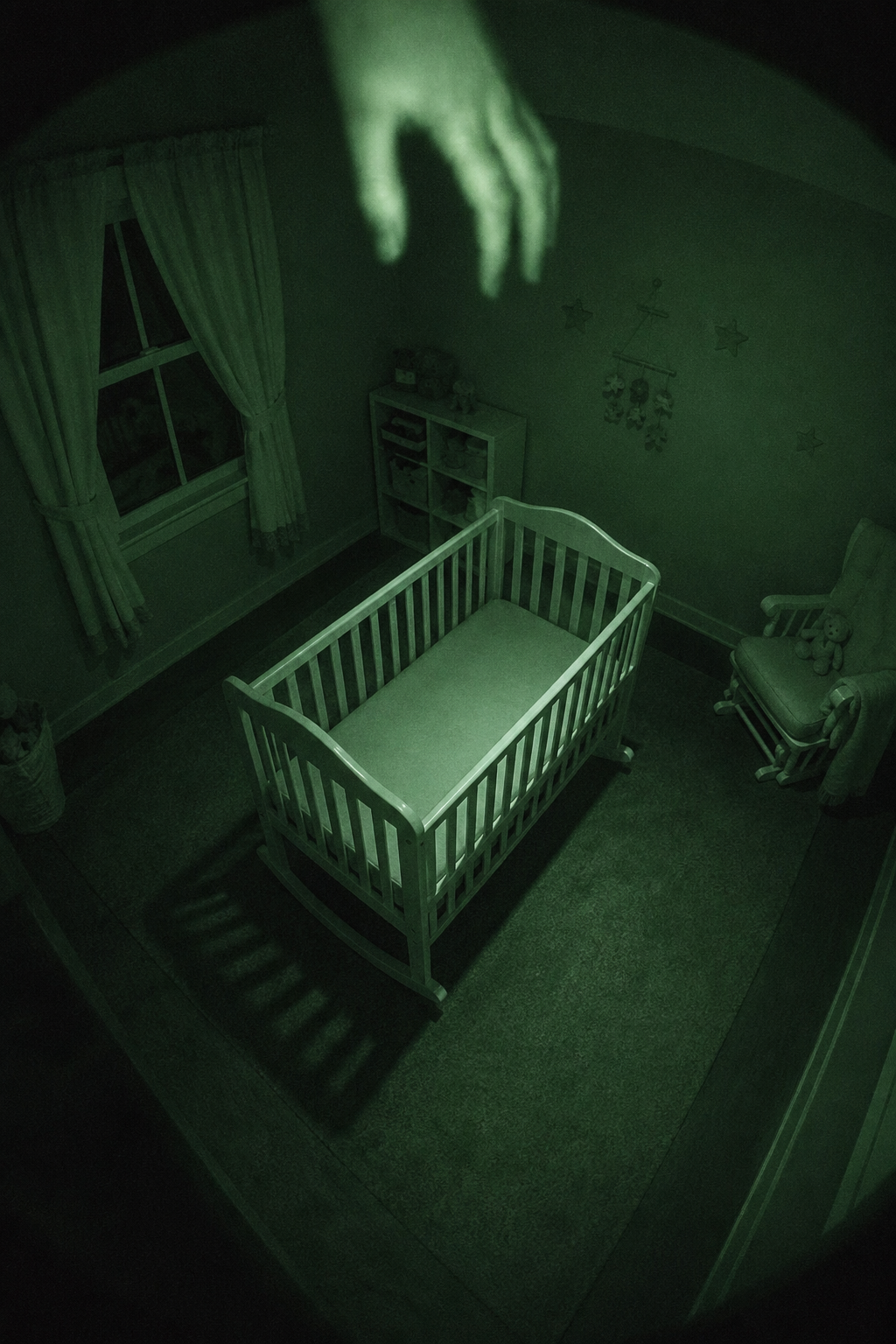
Children in horror are often used cheaply, either as victims or little prophets. That is not what interests these narrators. What matters is why adults across different traditions repeatedly notice the same pattern: a child points, refuses a room, speaks to someone unseen, or reacts before the older people will admit anything is wrong.
The explanations differ, but none of the narrators treats the pattern as adorable.

Scottish narrator
A child has not yet learned which wrongness to ignore
Alasdair's view is not sentimental. He does not think children are pure in some theatrical way. He thinks they are untrained. Adults become competent by discounting stray sounds, half-glimpsed movement, odd drafts, and sudden silences. Most of the time that habit is useful. Occasionally it becomes the very thing that keeps a person from seeing what is plainly in front of him.
A child, especially in a new place, has not finished learning which sensations are supposed to be dismissed. That makes him inconveniently honest about discomfort. If he says the stair is wrong, the room smells sad, or there is a woman where no one else sees one, Alasdair's instinct is not belief but attention. The adults around him are usually too eager to restore order.
He distrusts the phrase imagination. It is often what adults say when they do not want to rearrange the room.

Macanese narrator
Children react before the household can hide its imbalance
Manuel sees the matter as social as well as spiritual. In many households, adults rush to smooth over tension, embarrassment, mourning, jealousy, debt, or ritual neglect. A child cannot perform that smoothing with the same skill. So when a house has gone wrong, the child often becomes the first person whose body shows it honestly.
He pays attention less to what a child claims to see than to the pattern of refusal. Will the child no longer sleep facing one wall? Does he keep food untouched only in one room? Does he greet a corner the adults step around? These are not proofs, but neither are they noise. They are forms of unschooled diagnosis.
His warning is severe for parents who laugh too early. Once a child begins adjusting to an imbalance instead of resisting it, the household has already been late in responding.

Burmese narrator
Children are often noticed because they do not guard themselves with pride
U Htun Win thinks adults make themselves heavy. Pride, skepticism, irritation, and routine all reduce responsiveness. A child has fear, certainly, but not the same thick shell of certainty. That can make him more easily frightened. It can also make him more easily noticed.
He is careful not to romanticize this. Sensitivity is not a gift if the adults around the child refuse to take responsibility. A child who starts waking at one hour every night, speaking to the same empty place, or refusing an ordinary threshold should not be treated as entertainment. In his view, the moral failure is often the adult who turns a warning into a story before turning it into action.
His rule is simple. When a child becomes consistent, the adults must become disciplined.

Hindu narrator
Children notice what adults have already agreed not to mention
Rajeev does not think children are mystical. He thinks they are not yet trained to hide embarrassment. Adults can move a lamp, cover a mirror, or shift a chair and then continue talking as if the room has not changed. A child notices the change before the explanation starts.
He pays attention to children who point at the exact thing the adults have decided to ignore: a shrine moved slightly off center, a threshold crossed with shoes on, a guest treated like an inconvenience. In his view, that reaction is often the cleanest report the house will get.
His rule is to stop improvising once the child starts repeating the same warning. At that point the adults are no longer being practical; they are just delaying embarrassment.
The narrators arrive at the same conclusion from different directions: children notice wrongness first because adults train themselves not to.
That does not make every child a seer. It makes adult dismissal one of the oldest accelerants in horror.