May 1, 2026 | 6 min read
Why Mirrors Are Covered After Death
Four narrators from different traditions discuss why reflective surfaces become dangerous after a death in the house.
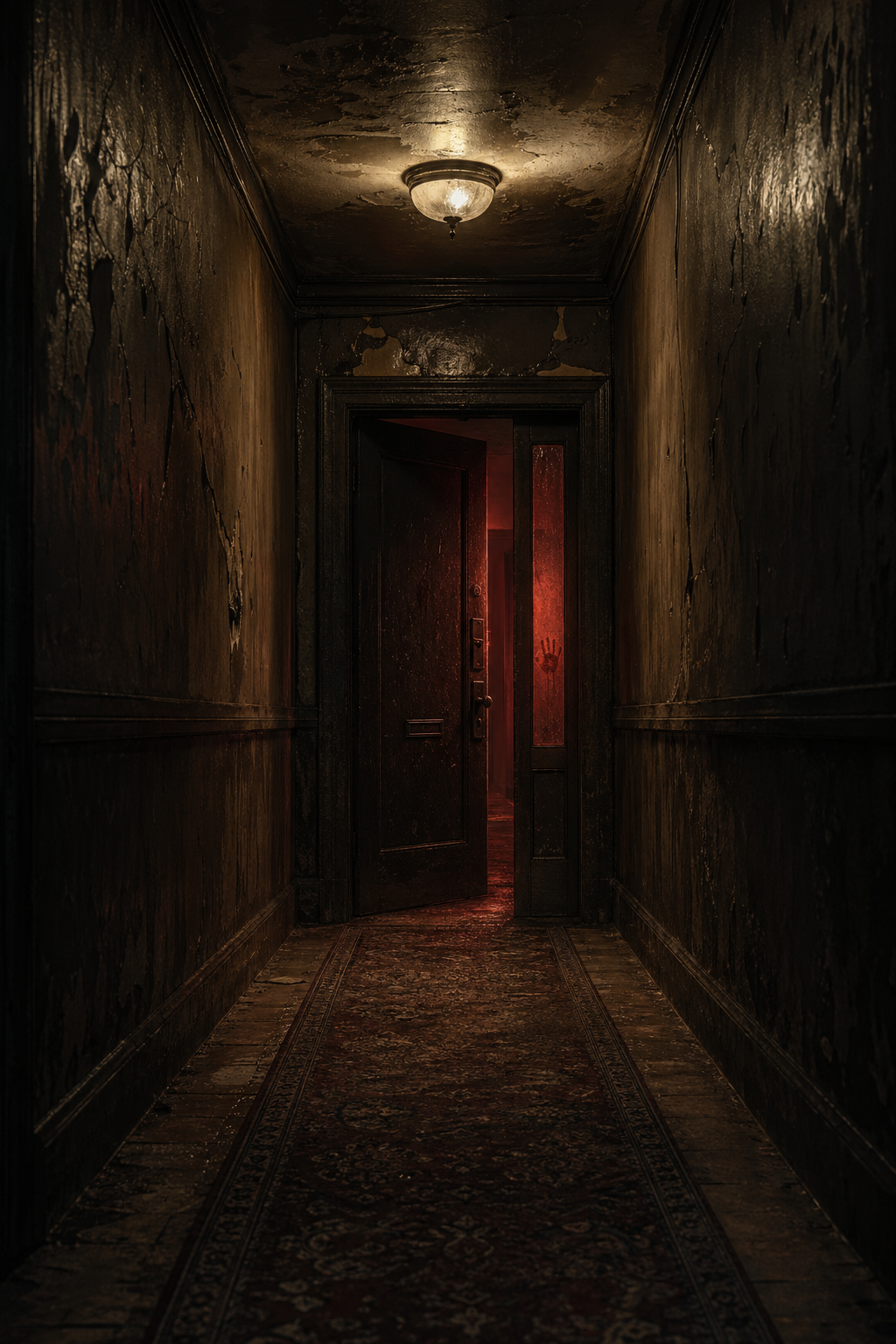
This section is not fiction. It is where the narrators compare the signs, taboos, and practical rules that sit behind fear. The point is not to prove a belief. The point is to show how different men learn what not to ignore.
The first question is a familiar one across many places: why do people cover mirrors after someone dies? The answers are not the same, and the reasons matter.

Scottish narrator
A mirror can keep a room from settling
Alasdair does not treat covering a mirror as pageantry. For him, the problem is not that glass is magical in a childish sense. It is that a death disturbs the proper boundary of a room. The mirror does not cause the trouble, but it gives the wrong thing one more surface to stay in.
He frames it as an old practical habit: after a death, the house should be quieted, not multiplied. People lower voices, stop clocks, close doors, and cover what reflects because reflection feels like a second occupancy. If the dead are not yet gone, you do not want them seeing the room hold them twice.
His warning is plain. A family that laughs at the cloth over the mirror often still grows careful when no one wants to pass the landing alone before dawn.

Macanese narrator
Reflection is also a matter of household order
Manuel treats the mirror less as a romantic object and more as part of a ritual environment. If the house has entered mourning, then the order of the space changes. Offerings, posture, speech, and movement all become more deliberate. A mirror left bare can feel like an opening for the wrong attention, especially when grief has already made the household porous.
He is careful to connect it to respect rather than spectacle. Covering the mirror is not only about fear of a ghost appearing in the glass. It is about not leaving the living in careless relation to the dead. A disturbed reflection, in his view, is evidence that the house has not been properly settled.
He distrusts partial observance. If someone insists on the ritual but treats the rest of the mourning period casually, then what remains is not protection. It is only performance.

Burmese narrator
A person should not linger by seeing themselves where they no longer belong
U Htun Win speaks more softly about it, but his view is the hardest. He does not like anything that confuses a departure. A death already creates hesitation: among the living, among the mourners, and, in belief, perhaps in the one who has just gone. Anything that invites delay is unkind.
He sees the covered mirror as part protection, part courtesy. You do not offer the dead another version of the room to turn back toward. Nor do you offer the grieving a place to mistake exhaustion, fear, or visitation for ordinary sight. In his terms, a house after death should reduce invitations, not increase them.
His most severe warning is that people do not always know when mourning has ended. They think the ritual is over when the guests have left. Sometimes the dangerous part starts after the chairs are put back.

Hindu narrator
A covered mirror keeps the room from pretending it is still open
Rajeev treats the mirror as part of the room's sequence, not a decoration. When a death has happened, the household has already been forced into one broken order. He does not like leaving any reflective surface bare while the rites are still unsettled, because the room should not look available for ordinary business.
He is not interested in drama about the dead appearing in glass. What concerns him is the way people continue talking, moving, and negotiating as if the room has already closed. A covered mirror tells the family that the house is still in a different state and should not be treated as complete just because everyone has become tired.
His rule is practical: close the room properly first, then uncover what reflects it. If you do that in the wrong order, people begin acting as if the departure was symbolic and not a change in residence.
The narrators do not agree on the exact mechanism, but they agree on the practical rule: after a death, reflection is not neutral.
That is the purpose of this section. Not certainty, but pressure. A reader may not adopt the belief, but he should at least understand why someone else no longer looks into that glass.