May 2, 2026 | 5 min read
Never Sleep With Both Boots Facing the Door
A hiker in a remote Glen Coe bothy ignores the local warning about how to arrange his gear and finds out what the mountain is trying to step into.
Narrated by
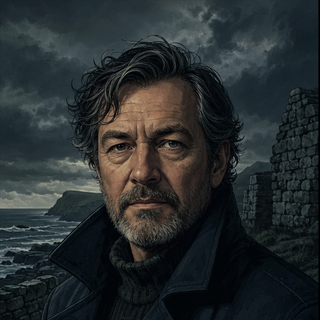
The bothy at Coire Gabh is a place of hard stone and harder silences. I reached it just as the light was failing, the mist rolling off the Three Sisters like a funeral shroud. The only other occupant was an old man with a beard the color of bog-cotton who was already rolling out his sleeping bag by the hearth. He looked like he’d been part of the masonry for a century.
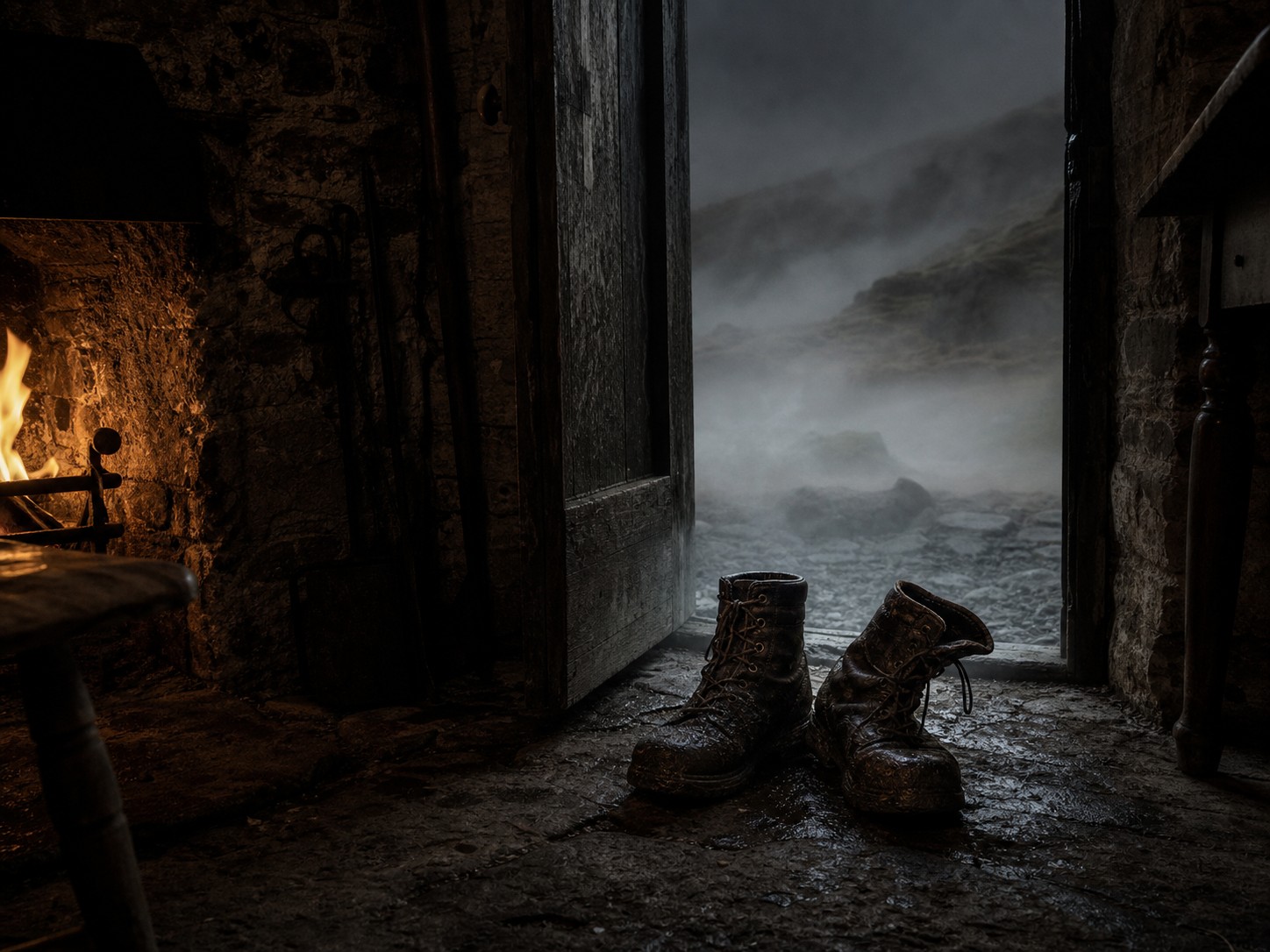
I set my boots by the door to dry. They were heavy leather, caked in the black peat of the glen. I stood them neatly, both toes pointing toward the exit. It seemed practical—the quickest way to step into them if I needed to leave in a hurry. I even laced them tight to keep the shape.
The old man didn't look up from his stove. 'Turn one of them, lad,' he said, his voice like gravel shifting in a stream. 'Never sleep with both boots facing the door. You’re giving the glen an invitation to walk out in your skin. One foot for the road, one for the wall. That’s the arrangement.'
I was twenty-two and full of mountain-climbing arrogance. I told him I wasn't superstitious, just tired. I left the boots as they were and crawled into my bag. The wind outside began to howl, a low, rhythmic sound that felt like it was trying to articulate a name, and the stone floor seemed to suck the heat right out of my spine.
I woke at three a.m. to a sound that wasn't the wind. It was the sound of leather stretching—a wet, organic creaking. My boots were no longer by the door. They were at the foot of my sleeping bag. They were standing upright, but the leather was pulsing, expanding and contracting like a pair of lungs. And they were taller. The ankles had elongated, reaching up toward the rafters like two black, leather towers.
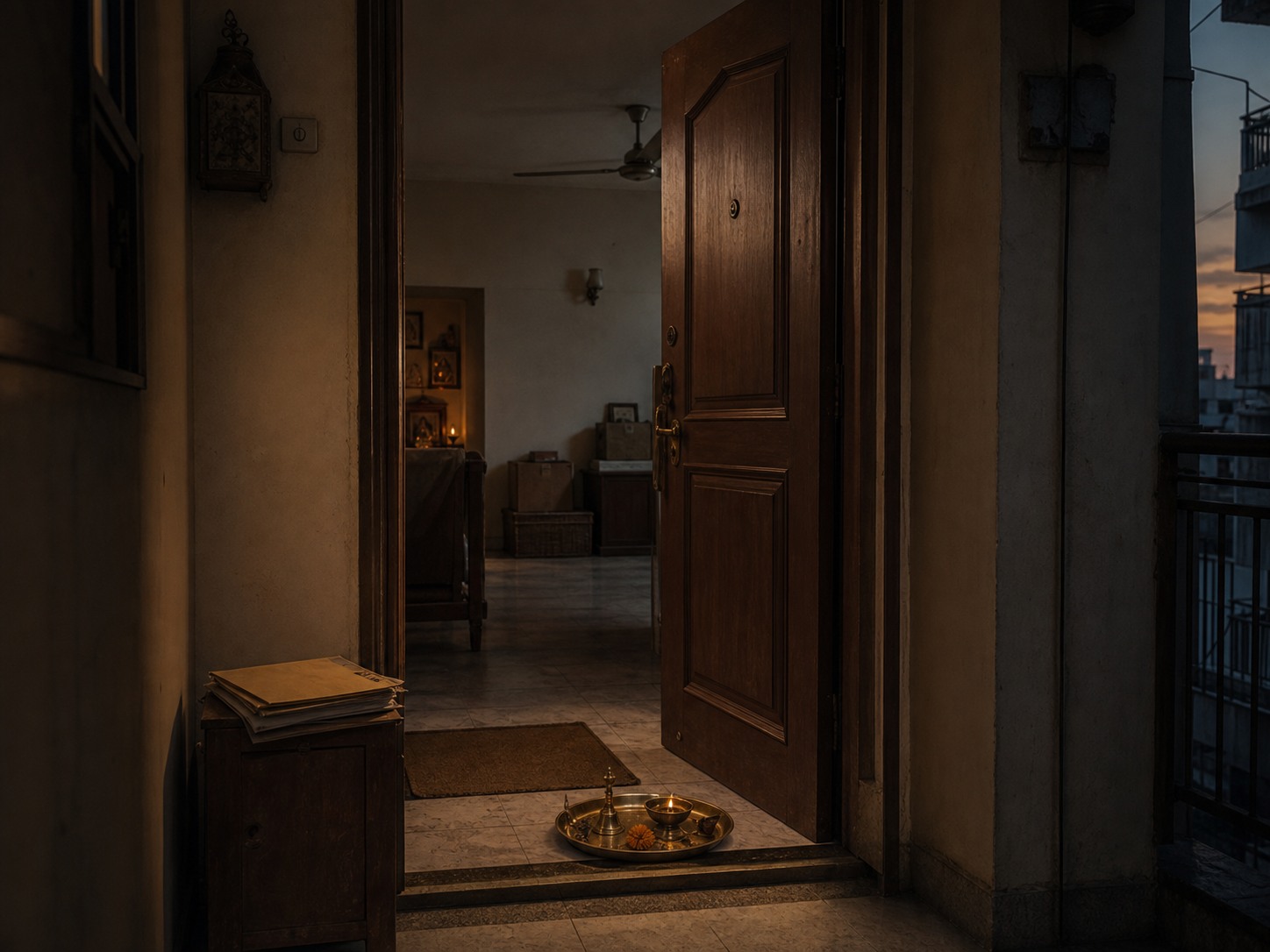
I looked at the door. It was wide open, though I had bolted it myself. The mist was pouring in, a thick, white tide that felt heavy as water and smelled of ancient decay. In the center of the mist stood a figure made of nothing but shadow and the scent of wet earth. It had no feet. It ended in jagged, bleeding stumps of darkness that left black smears on the stone.
The figure took a step toward me, and as it did, the boots on the floor mimicked the movement. They didn't move forward; they reached out. The leather split with a sound like a gunshot, and white, root-like fingers erupted from the eyelets, grasping for my ankles with a strength that felt like a rockslide. I felt the cold of the mountain's core in their touch.
I scrambled back, kicking at the boots, but they were heavy as lead and warm to the touch. The old man was gone—his sleeping bag was empty, and in its place was a pile of dry heather and a single boot facing the wall, filled with fresh soil. I realized then the rule wasn't for the gear; it was to keep your soul from being stepped into.
I grabbed my pack and ran out into the mist, barefoot and screaming. I didn't stop until I reached the road at Glencoe. My feet were shredded by the scree, the skin hanging in ribbons, but I didn't care. I never went back for those boots. Sometimes, on a misty night, I’ll hear the sound of heavy, rhythmic footsteps on the pavement outside my house—one heavy leather thud, one wet, dragging sound—and I’ll know that the glen is still trying to find the second half of the pair.