May 3, 2026 | 5 min read
The Ledger That Balanced After Sunset
A textile businessman discovers that one old account closes perfectly only after sunset, and only because a vow he delayed is still charging interest.

Narrated by

There are losses a businessman can explain: freight damage, bad cotton, a partner's illness, a buyer who lies with a pleasant face. Then there are losses that behave too politely to be called losses until they have already settled into the structure of your days. What happened in our old account room belongs to the second kind. I have never discussed it in the office. The men who work under me believe I am exact because my father was exact. It is easier for everyone if they continue believing that than to know exactness is sometimes only fear with good stationery.
The matter began in the quarter after my uncle's bypass surgery, when he made a vow at a small Lakshmi temple near Dhalgarwad. If the operation succeeded, he said, our firm would fund the repair of the temple's broken side gate before the monsoon. It was not a large promise. The estimate was smaller than one spoiled shipment. But recovery dragged on, the contractor delayed, the market turned uncertain, and the vow joined the long shelf of respectable obligations that practical men intend to honor after one more urgent thing is settled first.
My uncle survived. The gate did not get repaired.
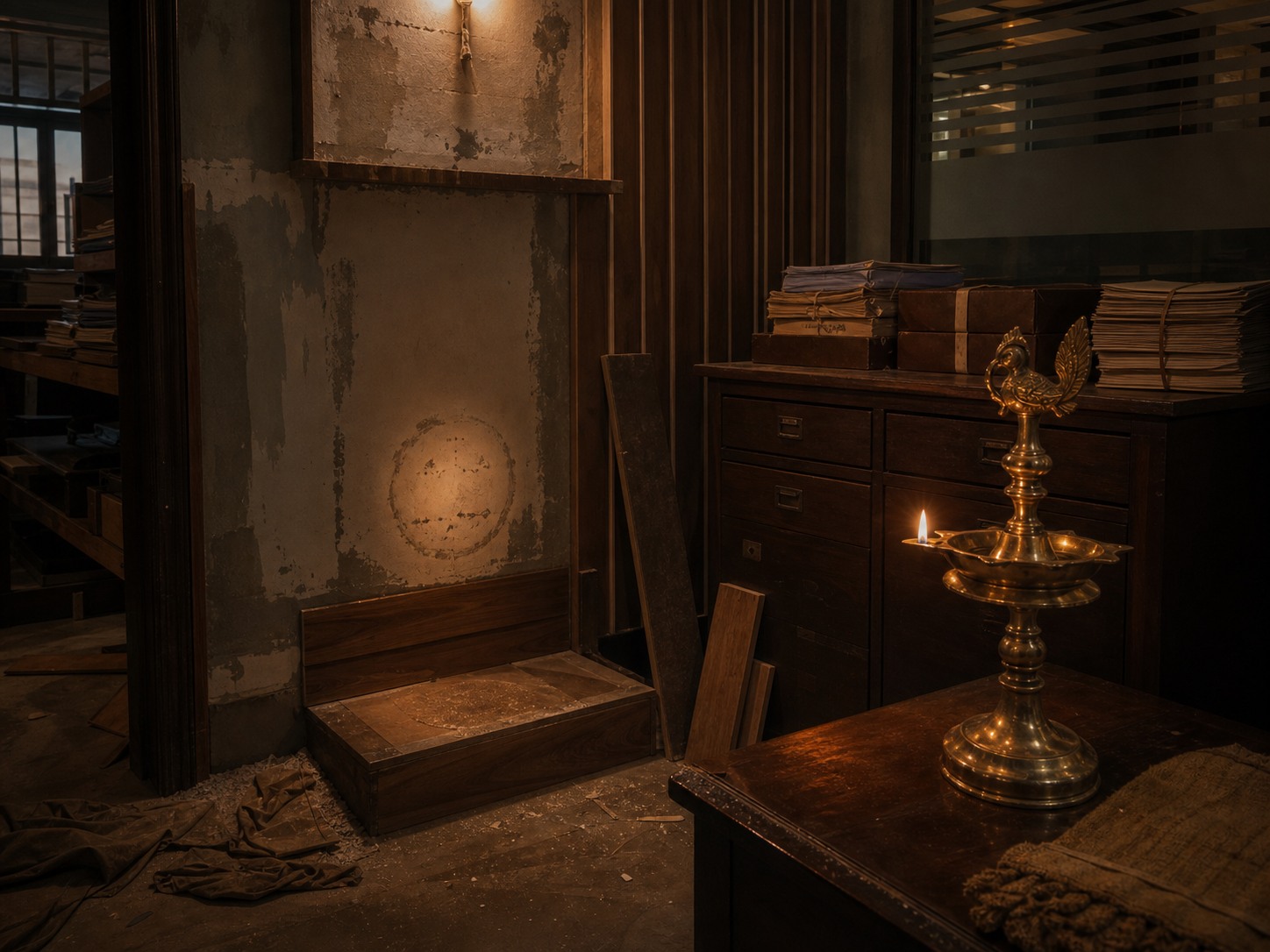
By August I was staying late almost every evening in the old account room at the back of the second floor. It is a narrow place with one grilled window, two steel cupboards, a wall fan that chatters like loose teeth, and teak shelves bowed under forty years of ledgers wrapped in cloth. The room smells of starch dust, binding glue, mildew in the monsoon, and sometimes the faint sweetness of machine oil from the workshop below. I prefer it to the front office because numbers misbehave less when people are not talking near them.
The first sign was so clean I nearly admired it. A receivables ledger for one of our older mill clients refused to reconcile by a shortfall of 18,600 rupees. Not a ruinous amount. Small enough to embarrass, large enough to demand explanation. I checked vouchers, dispatch notes, bank entries, handwritten adjustments, GST references, and courier acknowledgments. By six-thirty in the evening it still would not close. I locked the room, went downstairs for tea, and came back after sunset to try again with a clearer head. The amount had vanished. The columns matched to the rupee. Every line was in my own writing, but one notation at the margin had darkened into view as though the ink had waited for weaker light: balance after offering. The letters were dry to the touch but carried the faint smell of lamp smoke.
I told myself I had missed it earlier. That was not yet a lie. The human eye is fully capable of humiliating itself in bad light. I initialed the page and moved on. The next night it happened again in a different file. This time the discrepancy was 23,400, tied to a transport advance that should have cleared in July. The books stayed open and stubborn until the evening prayer bells from the lane temple reached the window grille. Then the figures aligned so neatly it was insulting. At the bottom of the page, in a hand too controlled to be accidental, appeared the letters G.R. My grandfather used those initials for gate repair expenses and for nothing else.
By the fourth occurrence I stopped blaming fatigue. The pattern was exact. During daylight, one selected account would remain short. Not random accounts. Always old ones connected to property, upkeep, long-standing clients, or family obligations. After sunset, once the street lamps came on and the room glass turned from window to mirror, the same account would settle itself. A balancing note would appear in the margin. Sometimes it said balance after offering. Sometimes gate first. Once, in a tighter hand that leaned sharply to the right, it said promise heard. On two pages, the correction line arrived with a faint reddish bloom at the paper edge, as if iron had sweated through the fibers.
I did not tell my uncle. He would have taken it as accusation, and he was still recovering the dignity illness removes from a man in layers. I did not tell my staff because men in account departments are already too susceptible to patterns. Instead I changed my working habit. I began checking the suspect files once in the afternoon and once again after sunset. During the day the shortfall remained. At night the books closed. Then I discovered the cost. Each corrected account had been balanced not by recovering missing money, but by shifting the absence elsewhere. Small overpayments appeared under inactive client codes. Transport deductions surfaced in orders not yet dispatched. One dead supplier's security deposit re-entered the live books with no corresponding voucher. The ledger was not forgiving the debt. It was redistributing it through the house. A promise deferred in one corner was collecting from whichever drawer had been left unlocked.
The account clerk under me, Paresh, noticed before I wanted him to. He was a thin, courteous man who sharpened his pencils with a blade instead of a machine because he distrusted shavings scattered near paperwork. One evening he set a trial balance on my desk and asked, very carefully, why we were reopening the old G.R. codes. I said we were not. He pointed to a page I had locked in the cupboard an hour earlier. The code was there in red, fresh enough to shine. He did not ask another question, but from the next day onward he refused to remain in the account room after sunset. At five-fifty he would stack the day books, cover the adding machine, and leave as though a train had to be caught. Once he paused at the door and asked whether I wanted the temple bell from the lane shut out by closing the window early. I told him no. He looked relieved that I had answered at all.
The first physical thing happened on a Thursday. The temple committee secretary came to the shop floor to remind me, with more courtesy than I deserved, that the gate repair quote was expiring. I promised him payment the following week. He smiled, pressed his palms together, and said, 'A vow does not become cheaper because we delay it, Rajeevbhai.' After he left, I went upstairs irritated with him and more irritated with myself. The room was unlocked. I was certain I had locked it. Inside, every ledger I had been working on was laid open to a different page, each one showing a minor corrected balance in the evening ink, and on the windowsill sat a small heap of rust-colored filings. When I touched them, they stained my fingers the way old gate metal stains after rain.
That night the fan stopped while I was inside. Not slowed. Stopped. The air became close and hot enough that my collar stuck to my neck. I heard no footsteps, but the teak shelf behind me gave one deep settling sound, as if a heavy new volume had been added. I turned and saw my grandfather's 1989 master ledger on the floor. It had been tied shut with cotton tape and stored on the highest shelf for years because the spine was failing. The tape was now neatly untied. The book was open at the page for property maintenance and temple subscriptions. One line had been marked with a ruler-straight underline in wet brown oil. Side gate, Lakshmi temple, due before rains. Beside it sat one fresh rust flake, no larger than a fingernail clipping, on the paper itself.
I did not run. I wish I could say that was courage. In truth, I was too offended. I sat down, opened my uncle's current liability file, and calculated the full repair amount with labor escalation, transport, repainting, and a donation for the missed season. The total came to 41,800. When I entered it provisionally into the books, every distorted account from the previous three weeks snapped back into alignment at once. I felt it more than saw it. The room loosened. The pressure in the air changed. Somewhere below, in the lane, a scooter horn sounded and ordinary city noise returned as if a hand had come off my throat.
Then the lights went out.
Only for a second. But in that second I saw the window glass reflect the room as it had been when my grandfather worked there: no plastic calculator, no LED emergency lamp, no steel filing tray from the bank promotion, only the old slanted desk, the brass paperweights, and a man seated with his head slightly bent over the book. I did not see his face. I saw the angle of his shoulder and the familiar economy of his writing hand. When the lights returned, the room was present-day again. On the open liability page, beside my provisional entry, someone had written in a hand I knew before I admitted knowing it: interest for delay.
The next morning I transferred the money before business hours. Not promised. Not scheduled. Paid. By evening the temple secretary sent photographs of the workmen unloading new iron sections beside the broken gate. Paresh asked me, with studied casualness, whether he should retire the reopened codes. I told him yes. He hesitated, then said, 'It feels lighter in there today.' I replied that humidity had dropped. He was kind enough to let me keep that answer.
The repair was completed before the week ended. The accounts normalized. No more evening corrections appeared. No old supplier deposits walked back into the living columns. The rust filings on the sill did not return. If the story ended there, I might have called it a lesson and left it at that. But three months later, while reviewing the Diwali charity allocations, I opened the 1989 master ledger again to check a subscription pattern. Tucked between two brittle pages was a narrow receipt slip from the Lakshmi temple, older than I am in business, signed by my grandfather for a side-gate repair fund that had apparently been postponed in his own year as well.
The amount on that receipt was 1,800 rupees. At the bottom, in his hand, he had written: carry this only once.
I keep that slip in my desk now, not as a relic and not as a comfort. It is a warning against the kind of delay respectable men call prudence when what they mean is that they would prefer the sacred to wait its turn behind cash flow. I still review ledgers after sunset. Habit is difficult to reform. But if an old obligation touches a temple, a threshold, a lamp, or a promise made aloud, I settle it before evening. Because a debt can remain unpaid without becoming dormant. Some of them simply wait for the light to change. Even now, if I ignore one too long, I will sometimes find a line in the day book pressed a little deeper than my pen could manage, as though someone has begun the correction before I have agreed to it.