May 2, 2026 | 5 min read
The Cracked Cup at the Nat Shelf
A weary traveler ignores a broken offering in a roadside tea shop and finds that some welcomes are actually debts.
Narrated by
The bus to Pyay broke down three miles from a tea shop that looked like it had been built from the wreckage of five others. It was that hour of the evening when the shadows of the tamarind trees grow long enough to touch the road, and the air begins to carry the scent of rain that never quite arrives. I was documenting the delays for my records, a habit that keeps the mind orderly in a chaotic country.
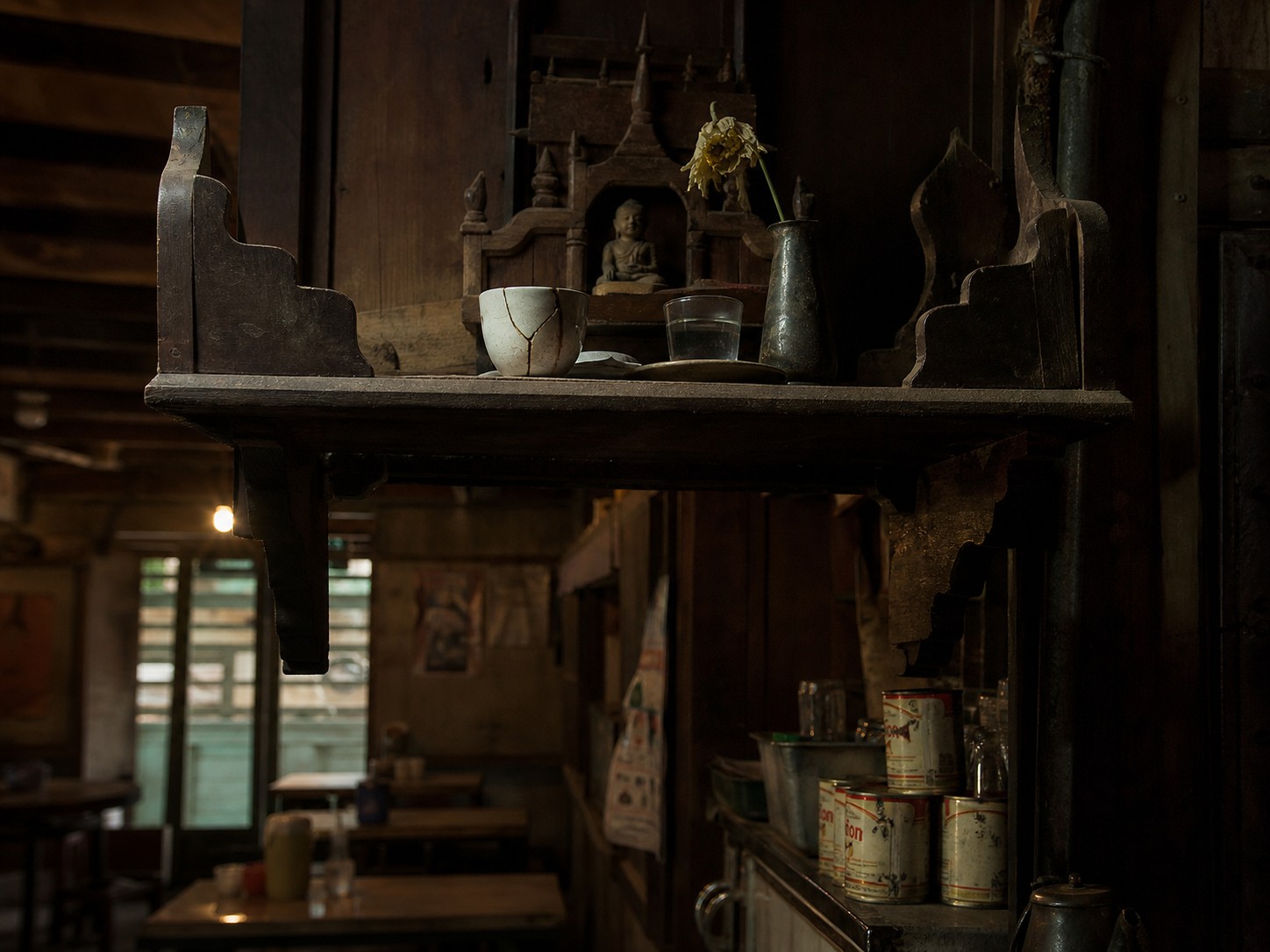
I was the only customer. The owner was a man with a missing finger and a way of looking at the rafters instead of his guests. I sat at the table directly beneath the nat shelf—the high wooden ledge where the household spirits are given their due. I didn't notice the cup until the tea was already poured, the steam rising in a way that felt too deliberate.
It was a small white ceramic cup, the kind used for water offerings. It had a jagged crack running from the rim to the base, and a single drop of water was weeping from the side like a slow, silver tear. In my records of spirit etiquette, a cracked cup on the shelf means the protection has been withdrawn. It means the house is no longer greeting the living; it is waiting for a different kind of visitor. It is a vacancy sign for the hungry.
I should have moved to a different table. But I was tired, and the tea was hot. I took a sip, and the moment the liquid touched my tongue, it turned bitter—the taste of old copper and graveyard soil. My jaw locked. I tried to set the cup down, but my hand wouldn't move. It was fixed to the table as if the wood had grown around my fingers in a second.
The owner stopped looking at the rafters. He looked at me, and his eyes were full of a pity that felt like a sentence. 'You sat in the shadow,' he said. 'Now you have to help the cup hold the water. It’s been leaking for three days.'
A cold wind blew through the shop, though the plastic curtains didn't stir. From the shadows behind the condensed milk cans, a woman stepped out. She was wearing a traditional longyi that was soaked at the hem, and her face was the color of a moon seen through smoke. She didn't look at the owner. She looked at the cracked cup in my hand, her eyes two wet, black pits.
She leaned down, her breath smelling of river silt and dead fish, and whispered, 'It’s leaking. If it empties, I have to go back to the water. Keep it full for me.' She didn't use her voice; the words appeared in my mind like ink on paper.
I felt a sudden, sharp weight in my chest. The tea in my own cup began to rise, overflowing the rim, but it didn't spill onto the table. It flowed upward, defying gravity in a thin, shimmering thread, and began to fill the cracked cup on the nat shelf above my head. As it did, the woman’s skin began to clear, the grey turning to a healthy, living bronze, while my own hand began to wither, the skin turning the color of old parchment.
I realized then the nature of the debt. The cracked cup wasn't an accident; it was a siphon. For every drop of life it leaked, it needed to take another from whoever sat in its shadow. I watched my own reflection in the tea tray grow pale, my eyes hollowing out as the woman grew more vibrant, her longyi drying before my eyes.
The bus driver honked from the road. The spell broke with the sound of the horn, and my hand came free, though three of my fingers remained white as bone. I didn't finish the tea. I didn't pay. I ran for the bus, my heart hammering a rhythm that sounded too slow to be my own, like a clock winding down.
I reached Pyay, but I didn't stay long. I keep a mirror in my pocket now. I check it every hour to see if the bronze is returning to my skin. But sometimes, when I'm near a river, I’ll hear the sound of water dripping into a ceramic cup—*drip, drip, drip*—and I’ll know that somewhere, the cracked cup is empty again, and she is looking for another traveler who doesn't check the shelf.