May 2, 2026 | 5 min read
The Empty Seat at the Banquet
At a lavish Macau wedding banquet, a server realizes that one empty chair has been set for a guest who is already eating.
Narrated by
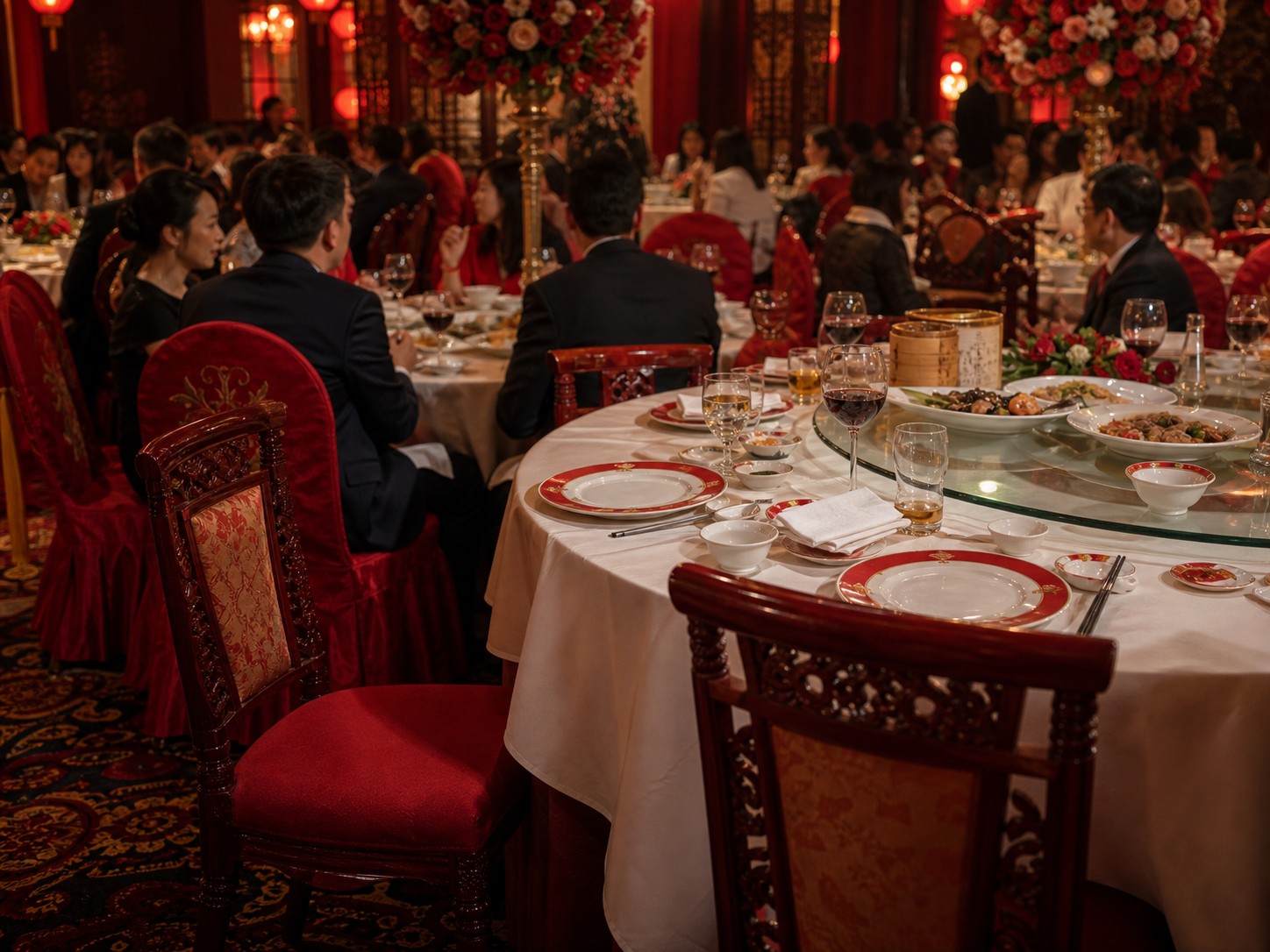
I’ve worked a hundred banquets in Cotai ballrooms, and they all blur together: the smell of shark fin soup, the roar of a thousand conversations, and the desperate scramble of the kitchen staff. But the Chen-Lao wedding was different. Table 14 had twelve chairs, but only eleven guests. And the room was too cold by half.
The host, a man with a face like a stressed bulldog, insisted the empty seat stay empty. He’d even paid for a full thirteen-course meal to be served to the empty air. We laughed in the kitchen, calling it 'the ghost’s share,' but as the night went on, the laughter died. The order was too precise.
I was serving the steamed garoupa when I noticed the chopsticks at Table 14. They were resting on the empty place setting, but they were moving. Not falling, but being used—lifting a piece of fish from the platter with a precision that made my skin crawl. The fish disappeared into thin air, leaving only a small, wet drip on the tablecloth that smelled of old river mud.
None of the other guests at Table 14 looked at the empty seat. They were talking louder than everyone else, their laughter sounding jagged and forced, like they were trying to drown out the sound of chewing. I saw the bride’s mother wipe a tear from her eye, her gaze fixed on the empty space with a look of pure, unadulterated terror. Her hands were white from gripping her napkin.
By the eighth course, the 'ghost' was becoming visible. Not as a person, but as a pressure-warp in the air, the outline of a young man in a traditional silk jacket, the kind worn for funerals. He was leaning forward, his 'hands' resting on the table, and he was staring at the groom with an expression of intense, hungry expectation. His shadow was longer than it should have been.
I leaned in to clear a plate, and the outline turned its head toward me. I felt a sudden, freezing cold, and for one second, I saw his eyes. They weren't eyes; they were two holes in the world, showing a dark, turbulent sea. He whispered, 'Don't let them cut the cake. The sweetness is the final debt for the life he stole.'
I tried to warn the head waiter, but he just told me to keep serving. As the cake was rolled out, the outline stood up. He didn't walk; he expanded, his shadow stretching across the entire hall until the gold-leaf ceiling turned the color of dried blood. The music died, and in the silence, we heard the sound of the 'guest' laughing—a sound like glass breaking.
The groom took the knife, his hand shaking so hard the blade rattled against the silver stand. As he made the first cut, a fountain of black, stagnant water and dead moths erupted from the center of the cake, drenching the bride and the front row of guests. The shimmer vanished, but the water didn't stop flowing, and it was hot.
The hall was evacuated, and the wedding was cancelled. I heard later that the groom never spoke again, and Table 14 is still kept empty in that hall, even when the room is fully booked. They say the guest is still there, and now he’s waiting for the server who saw him to bring the next course.