May 2, 2026 | 4 min read
The Incense Bends Inward
A Macau delivery runner ignores the state of an elevator lobby shrine and learns why some guests don't wait for the doors to open.
Narrated by
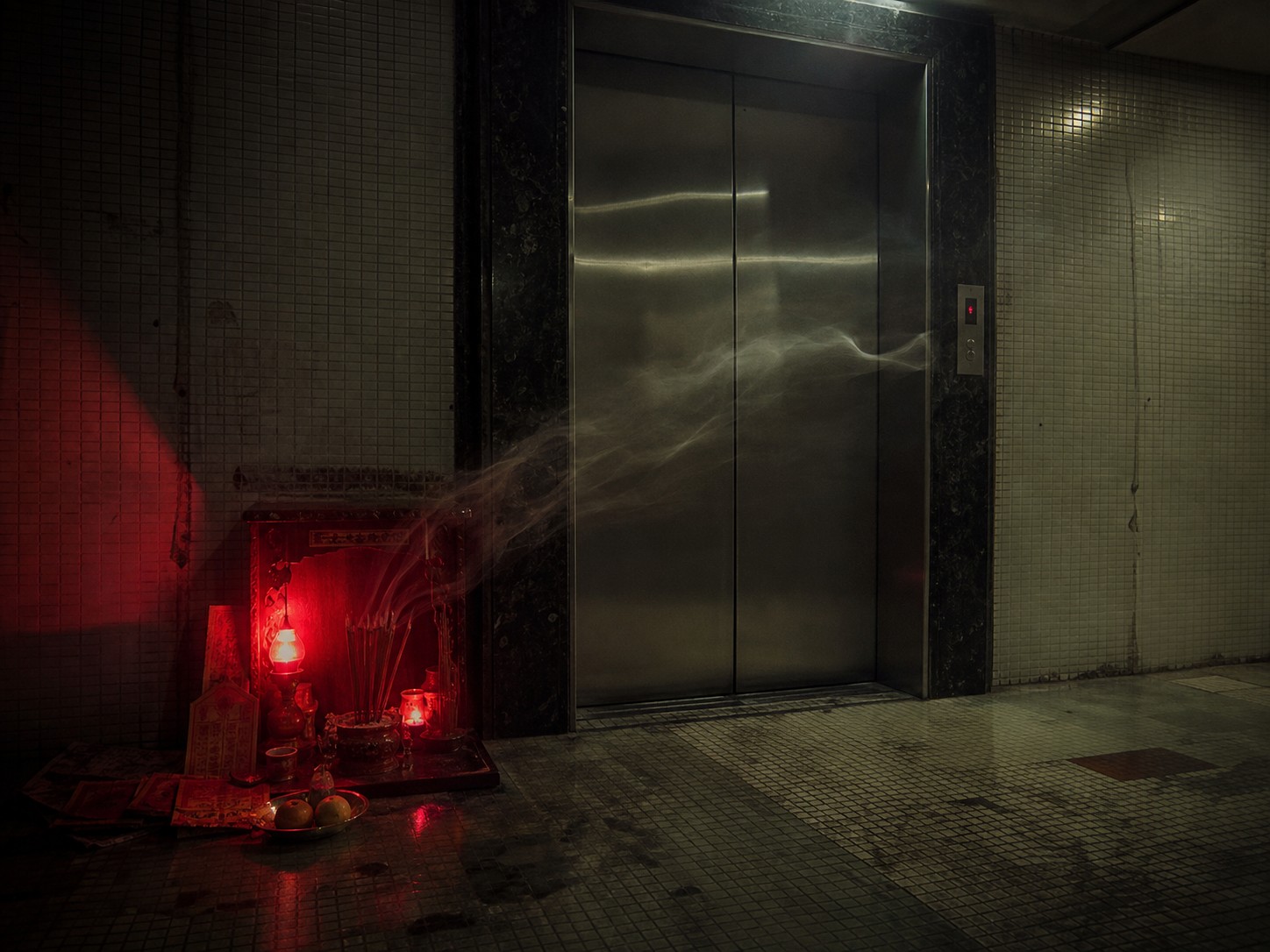
The Wah Lam Building off Estrada do Repouso is the kind of place where the humidity feels like a physical debt you can never fully pay off. I was finishing a double shift of delivery runs, my legs heavy and my phone battery at three percent—the kind of bad luck that usually invites worse company—when I stepped into the lobby for a drop-off on the 14th floor.
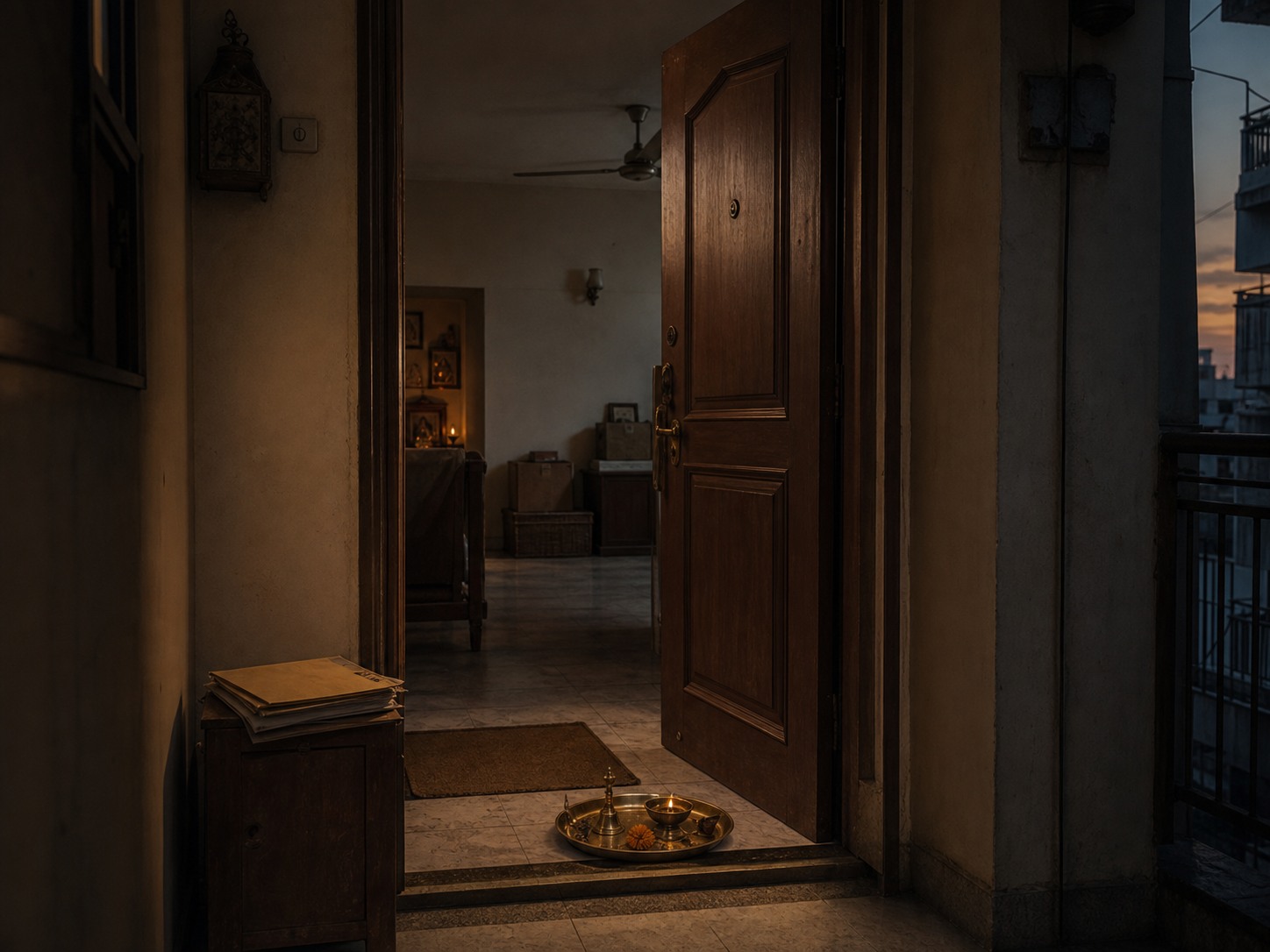
Next to the elevator bank stood a small red shrine for the Earth God. Usually, the incense smoke there drifts toward the open door to catch the street breeze. But that night, the smoke was doing something I’d never seen. It was bending inward, leaning toward the shut elevator doors as if something inside the shaft were breathing in, slow and deep.
My aunt used to say that if the incense pulls toward the metal, the metal is no longer yours. You take the stairs, or you wait for dawn. But I had three more orders and a supervisor who didn't believe in spiritual delays. I pressed the button. The metal felt warm, like skin.
The elevator arrived with a heavy, wet thud that made the floor tiles vibrate. When the doors opened, the air inside was cold—not the sharp cold of an air conditioner, but the damp, stagnant chill of a 1920s opium cellar that hasn't seen light in a century. I stepped in. The incense smoke from the lobby followed me, a thin grey ribbon reaching for the control panel like a blind man's hand.
I pressed 14. The button didn't light up. Instead, the number 4 began to blink—a steady, rhythmic pulse. In Macau, 4 is a word that sounds too much like death to be ignored on a late-night shift. I tried to press the open door button, but the panel felt soft, like the plastic had turned to wax under my thumb. My fingerprints stayed in the material.
The lift didn't move up. It moved sideways. It was a subtle shift at first, a grinding of cables that suggested the shaft was wider than the building itself, moving into a space the blueprints never showed. Then the lights flickered, and for one frame of darkness, I wasn't alone. A man in a saturated grey suit—the style they wore in the 40s during the occupation—was standing in the corner, his back to me, his reflection missing from the mirrored back wall.
He was holding a paper cup of tea. It was the same brand I’d just delivered to the lobby security guard, but the tea inside was black and thick as oil, and it was smoking. He didn't turn around. He only whispered, 'You brought the smoke in with you. Now we can find the way back out.' The smell of burning rubber and old jasmine filled the box.
The elevator doors opened on 4. But it wasn't the 4th floor. It was a corridor of identical red doors, all of them slightly ajar, with incense smoke pouring out from the gaps like blood from a wound. I didn't step out. I jammed my delivery bag into the door sensor, praying the nylon would hold, and mashed the lobby button with both fists, feeling the panel give way like wet cardboard.
The doors groaned, caught on the bag, and then snapped shut with enough force to shear the strap and the plastic casing of my phone. I felt the lift plummet—not a fall, but a return. When the doors opened again, I was back in the lobby. The shrine was gone. In its place was a wet patch on the floor in the shape of a man's footprint, pointing toward the street, still steaming.
I quit the delivery app that night. I still pass the Wah Lam Building sometimes, but I never look at the windows. On damp nights, I catch the smell of burnt wiring and drain water, and I know that somewhere inside, the incense is still bending the wrong way, and someone is still holding my bag.