May 1, 2026 | 5 min read
The Knock After Tide-Turn
A man in a rented seaside cottage is warned never to answer the door after the tide turns.

Narrated by
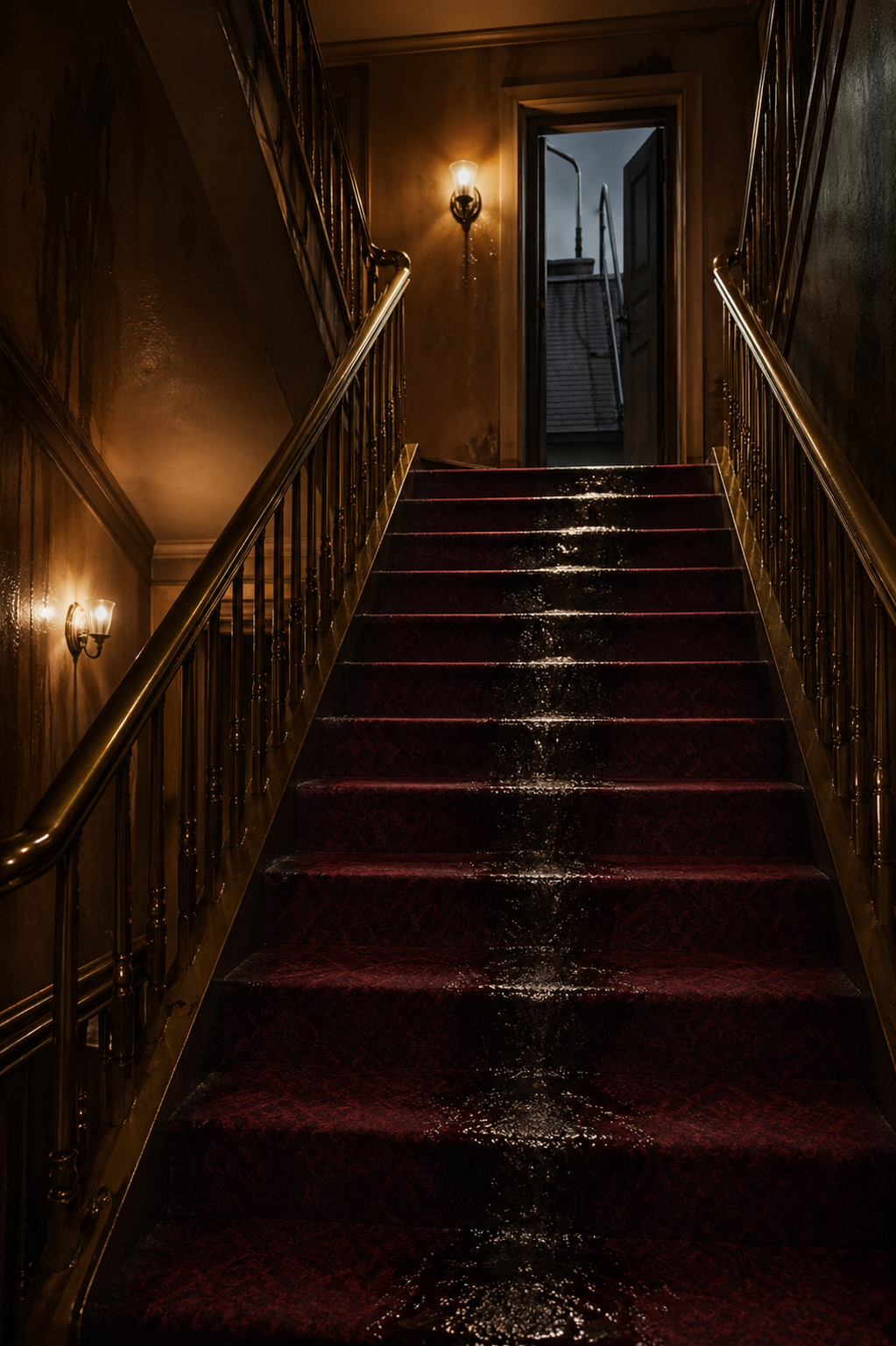
The cottage at Dunbrae stood alone above a strip of shale beach, with only one other light visible at night if the weather held. I had taken it for a week because the owner described it as quiet, which in letting language can mean either restful or abandoned by everyone with sense. When I collected the key from his sister in the village, she asked whether I planned to stay in after dark.
"Mostly," I said.
She nodded, as if I had answered a more important question than I understood. Then she added, "If you hear knocking after the tide turns, leave it alone. Folk still forget that one."
I asked who would be walking up to the cottage so late. She looked past me to the harbour and said, "Nobody you'll help by opening."
I would have laughed about it if the place had not already begun arranging my mood. The windows faced the sea but reflected only black once evening settled. The kitchen tap spat rust before running clear. On the mantel stood a row of smooth stones with one turned flat-side inward, as if the room had once been measured against them.
The first two nights were easy. Wind, surf, the odd complaint from gulls. On the third evening the weather changed just after ten. The sea had been noisy all day, but when the tide turned the sound seemed to pull away from the rocks instead of toward them, leaving a hush so complete I could hear my own sleeves move.
Then came three knocks at the door.
Not hurried, not loud. Just deliberate enough to suggest patience rather than need.
I froze with the kettle in my hand. The village sister's warning came back to me with embarrassing force. For a while I stood there like a fool, listening for a voice that did not follow. No calling of my name. No plea. Only the surf easing in and out below the bluff, as if the sea itself were breathing against the house.
At last I set the kettle down and looked through the front window beside the door. There was no one on the step. The gravel path ran pale under the porch lamp all the way to the gate. Beyond it, only bent grass and the black line of water.
That should have settled it. Instead it made the second knocking worse. It came not from the door this time but from the side wall of the cottage, where there was no entrance at all.
Three knocks again. Then, after a pause long enough for me to take one step back, a fourth, softer one from the bedroom window.
I went room to room without turning on another light. At the bedroom window I saw nothing but my own dim shape in the glass and, beyond that, a dark spread of shore newly exposed by the tide. There were footprints in it, deeper than any bird's and too narrow for boots, coming up from the waterline in a neat single file.
They stopped six feet short of the cottage wall.
I told myself there must be a ledge or culvert I could not see in the dark. I shut the bedroom curtain and returned to the kitchen. The knocking had stopped. I almost believed I had earned the right to feel foolish.
Then something brushed the door handle from outside.
It did not rattle or force it. It only tested the latch once, as if confirming that the rule was still necessary.
At dawn I walked down to the beach. The tide had gone out far enough to show a line of weed-blackened posts further along the cove. An old man from the village, gathering creels near the rocks, saw where I was looking and came over without being asked.
"There used to be another cottage there," he said. "Before the slip took it. Woman kept opening up when she heard folk at the door from the shore road. Trouble was, there'd not been a shore road there in fifty years."
I asked whose footprints I had seen.
He considered me for a moment, then looked back at the sea. "Depends," he said. "Did they stop at the wall, or did they wait for you to notice them first?"