May 2, 2026 | 4 min read
The Man at the Stop That Stayed Dry
In the middle of a torrential Yangon downpour, one man at a bus stop remains perfectly dry, and a commuter realizes he isn't waiting for a bus.
Narrated by
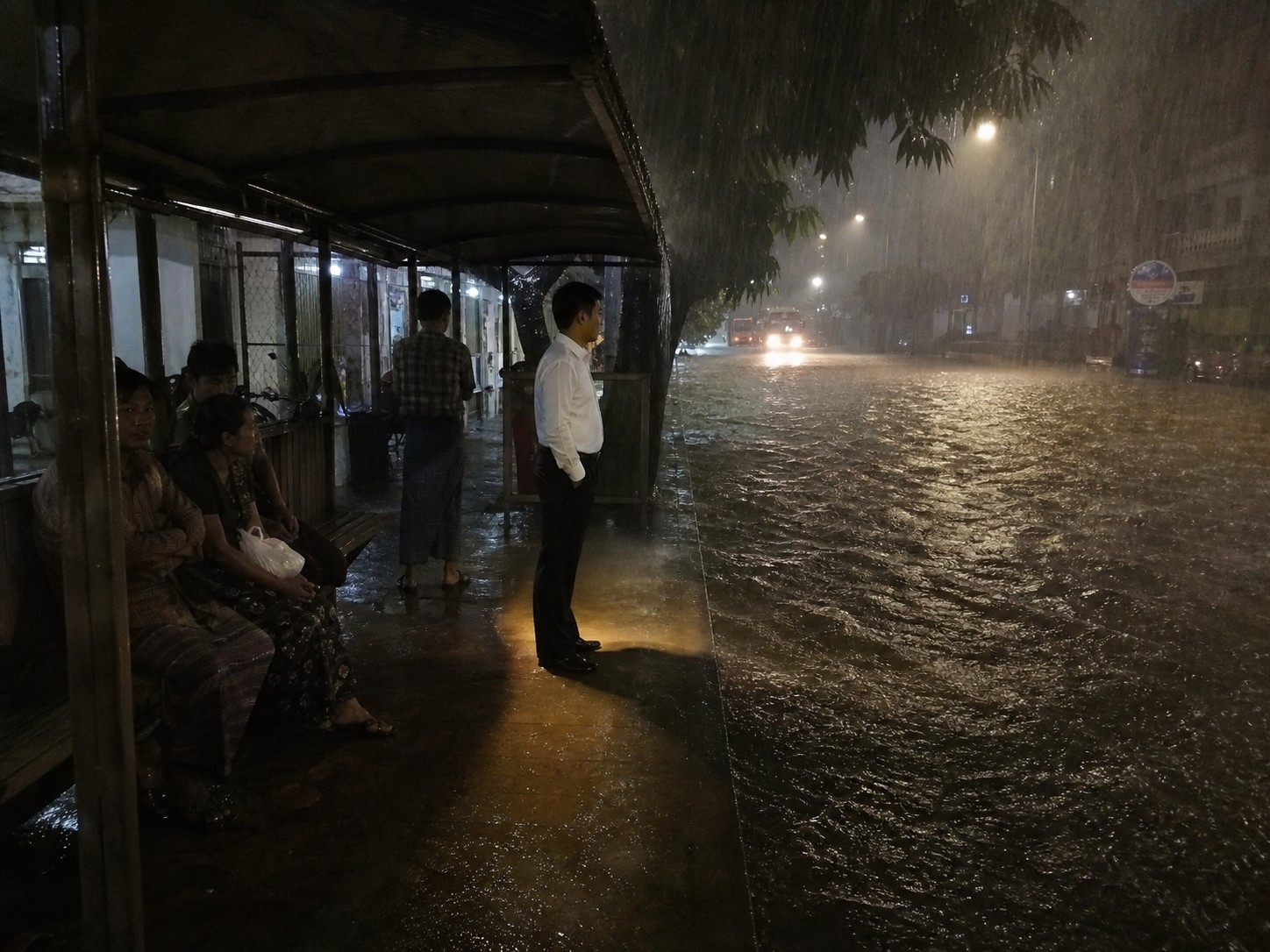
The monsoon in Yangon is a seasonal madness—a world of grey water, flooded gutters, and the constant, rhythmic slapping of windshield wipers. I was waiting for the Number 36 bus at a downtown stop by the old pagoda road, my records in a waterproof bag, the rain so heavy it felt like it was trying to hammer me into the pavement.
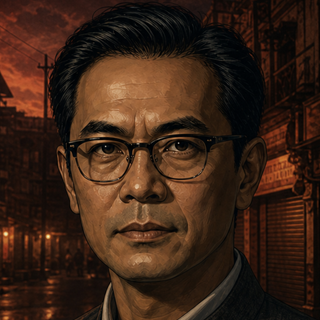
There were three of us under the small tin roof: me, an old woman with a basket of betel nut, and a man in a crisp white shirt and dark trousers. He was standing at the edge of the shelter, where the rain should have been drenching him, but he was perfectly, impossibly dry. Not a single drop touched his skin or his clothes; the water seemed to fear him.
I watched him for several minutes. The rain seemed to curve around him, as if he were encased in an invisible glass bubble. He didn't have an umbrella, and he didn't have a bag. He was just standing there, looking at his watch—a heavy, gold-rimmed thing that looked like it had stopped forty years ago, its hands frozen at 3:11.
The old woman noticed too. She stopped chewing and leaned away from him, her eyes fixed on the dry patch of pavement around his feet. 'He’s not waiting for the 36, Htun Win,' she whispered, her voice trembling. 'He’s waiting for the bridge that hasn't been built yet. He’s waiting for the water to be deep enough for the dead to swim.'
I asked her what she meant, but she just shook her head and got on the next bus, even though it wasn't her route. I was left alone with the dry man. He turned his head toward me, and I saw that his eyes were the color of sun-bleached bone, and his skin had the texture of old, dry paper. He had no reflection in the flooded road.
He spoke, and his voice sounded like the crackle of a dry radio in a storm. 'Is it still 1982?' he asked. I told him the year. He sighed, a sound like a long-held breath finally being released, carrying the smell of old incense. 'Then I’ve missed the crossing. The water has risen too high for the living to see the path, but not high enough for me to leave.'
A bus pulled up, but it wasn't a Number 36. It was an old, rusted vehicle with no driver and no lights, its destination board blank and glowing with a faint, green light. The doors opened with a wet, sucking sound. The dry man stepped onto the bus, and as he did, he finally became wet—his clothes soaking through in a split second, turning a dark, muddy brown, and his skin began to peel away in the rain.
The bus drove away, leaving no tracks in the flooded road and making no sound. I never saw it again, and I never saw the dry man again. But now, whenever it rains in Yangon, I check the feet of the people at the bus stop. I’m looking for the one who stays dry, because I know that if the water ever gets high enough, he won't be the only one boarding that bus.