May 2, 2026 | 4 min read
The Noodle Stall's Funeral Note
A street food vendor in an old Macau lane realizes a regular customer has been paying with paper meant for the dead.
Narrated by
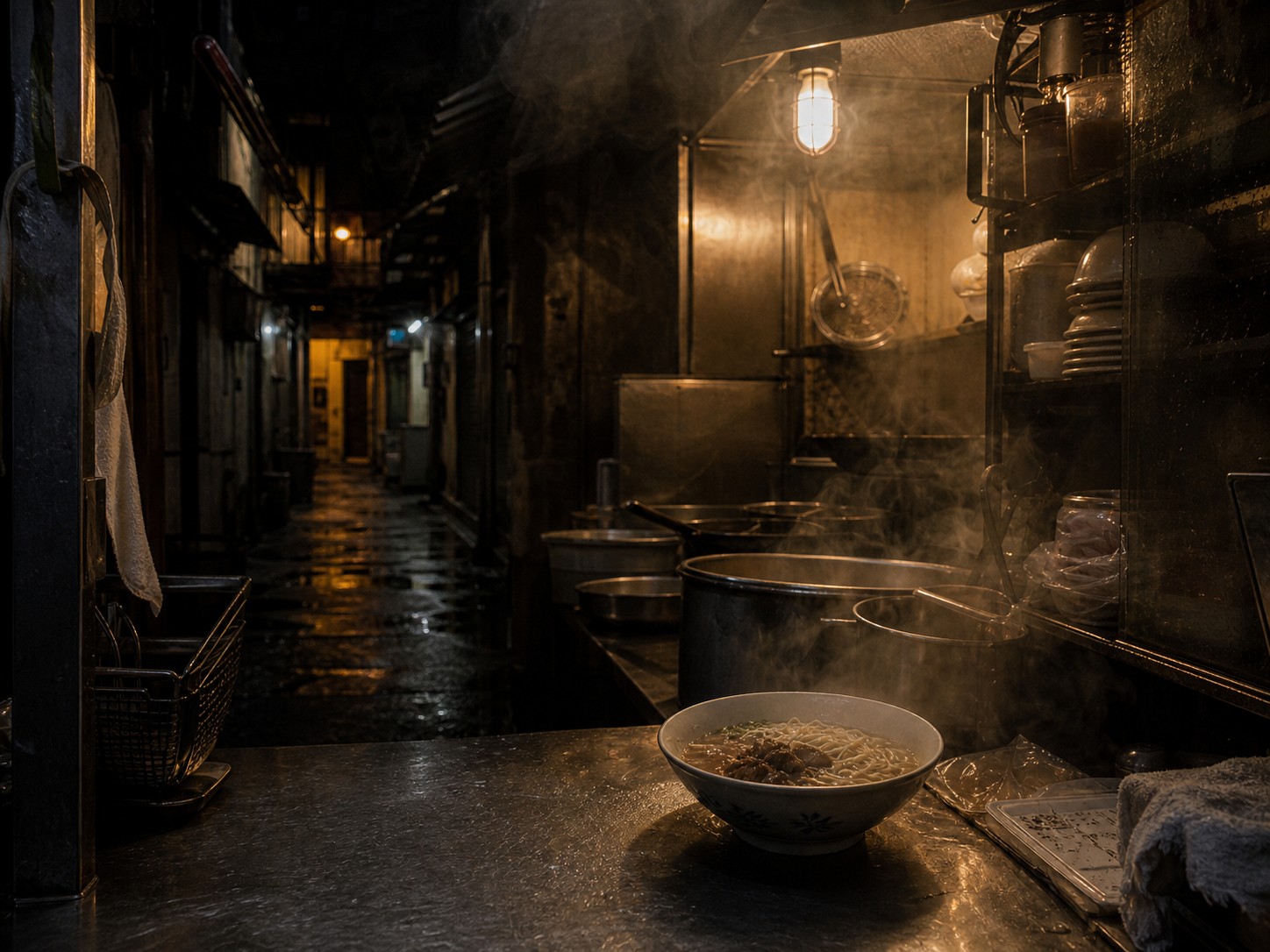
My uncle’s noodle stall in the Beco da Felicidade has been there since before the handover, a small island of heat and garlic in a sea of shadow. He has a regular who comes every Tuesday at 11:00 p.m.—a man in a faded blue worker’s shirt who never says a word, just points at the wonton noodles and pays with a crisp fifty-pataca note. He always arrives with the smell of old smoke.
I was covering the stall while my uncle was at the clinic. The man came, as expected. He was thinner than he looked in the dim light, his skin the color of damp cardboard and his eyes unnaturally bright. He handed me the note, and as I took it, my fingers went numb, a chill spreading up to my elbow. The paper felt too light, like it was made of pressed ash rather than cotton.
I put it in the till and served him. He ate with a frantic, mechanical speed, his eyes fixed on the bottom of the bowl as if he were searching for something he’d lost. When he finished, he didn't leave; he just faded into the steam of the pots. Not walked away—faded, his outline blurring until he was just another ribbon of grey vapor in the alley.
I checked the till immediately. The fifty-pataca note was gone. In its place was a piece of yellow funeral paper, the kind burned for the ancestors, folded into the shape of a small, perfect crane. On the wing, in charcoal that still felt warm, was written a single date: next Tuesday. And beneath it, my own name.
I showed it to my uncle when he returned. He didn't look surprised; he looked tired, his hands shaking as he took the crane. 'He’s been paying like that for three years, Manuel,' he said. 'He was the cook before me. He died in a grease fire in this very stall. He thinks he’s still on his break, and he’s looking for a replacement.'
I asked why my uncle kept serving him. He looked at the crane and then at the dark lane outside, where the shadows seemed to be reaching for the stall. 'Because if I don't, he’ll start cooking again. And he only knows how to use the heat from the other side. You smelled it, didn't you? The smell of meat that isn't pork.'
The next Tuesday, I watched from the shadows of the doorway. The man came, but he didn't order. He just stood there, looking at the pots with a look of profound, aching sorrow. My uncle served him a double portion, and as the man ate, the funeral paper in the till turned back into a real note for one second, then crumbled into a pile of black soot that spelled out 'Soon.'
I don't work the stall on Tuesdays anymore. I’ve realized that some debts in Macau aren't about money—they’re about the small, hot comfort of a bowl of noodles in a world that has already forgotten your name, and the price of that comfort is always more than you have in your pocket.