May 1, 2026 | 5 min read
The Stones We Turned Face-Up
A kirk restoration crew is warned never to turn the buried stones face-up after dusk.
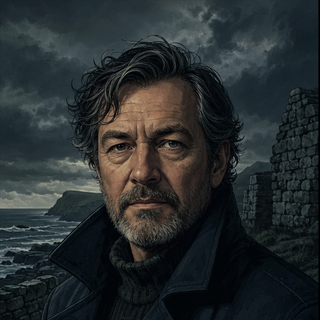
Narrated by
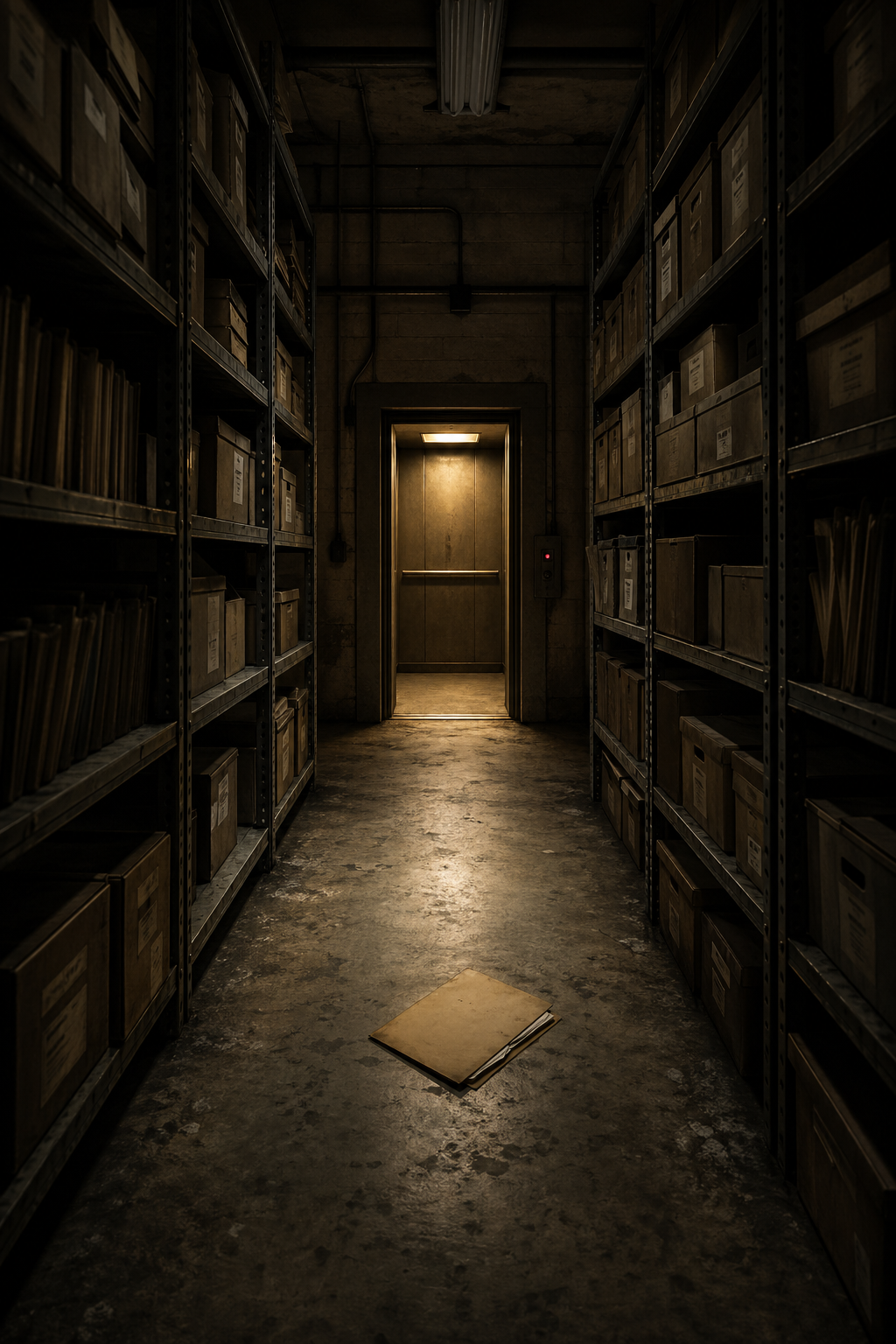
The work at St. Bride's began with damp rot in the choir wall and ended, as these jobs often do, with a great deal more of the dead than anyone had budgeted for. The kirk stood outside Kirkmuir with its windows boarded against gulls and boys, and by the second week we were lifting flagstones that had not seen daylight since the old laird's time.
The minister came by on the first evening and said very little. It was the sexton who stopped us as we stacked the dislodged markers by the south wall. He was a neat, elderly man with mud in the creases of his hands and a way of speaking that made refusal sound childish.
"If you uncover any of the name-stones," he said, "leave them flat till morning. Do not stand them face-up after dusk. The yard has enough to read without help from us."
Davy Muir, who ran the crew, grinned as if old men were put on earth to improve his mood. "What, they'll start answering back?"
The sexton looked at him for a long second. "Only if they're certain you're addressing the right one."
I noticed after that the way he checked the western sky before leaving, not his watch. Men who still measure time by light rather than clock usually have a reason for it.
We found the first name-stone under the chapel step just before six. It was smaller than I expected, child-sized perhaps, and worn smooth enough that the letters only showed when rain darkened them. Davy hauled it up, braced it against a stack of timber, and stepped back to admire his own efficiency.
"There," he said. "Now tomorrow's easier."
I told him to lay it down again. He asked when I had become such a pious bastard. We left it standing.
Nothing happened while there was still proper light. That was almost worse, because it let the foolishness settle in us as confidence. We kept working past the hour we should have packed up, taking advantage of dry weather. By the time the generator lamps went on, three more stones had been lifted and all four leaned upright by the wall with their names turned into the yard.
At half seven, Tomlin from plastering asked why children had started singing.
No one else had heard it until he said that. Then it was there plain enough: not close, not far, just somewhere among the graves beyond the lamp spill. A tune with no rise to it, the kind meant to keep time with a task rather than delight anyone. Davy swore and sent me to the gate to chase off whatever village brats had got in.
The gate was chained exactly as we had left it. Beyond it lay the road, empty except for the sexton's bicycle against the wall where he had forgotten to take it. I did not like that at all.
When I turned back, the singing had stopped. The yard was quiet enough that I could hear one of the upright stones tip slightly in the soil and settle again, though no wind had reached us.
Tomlin was no longer by the scaffold.
We found him kneeling in the dark between two open plots near the yew tree, his lamp on the ground beside him, both hands held out as if waiting to receive something. He kept whispering, "Wrong side. You've all been put the wrong side up."
Davy grabbed his shoulder and Tomlin shrieked with such force that the sound came back off the kirk wall in pieces. His face was wet, though it had not started raining. He pointed toward the stacked stones by the south wall.
The names were no longer the same way up.
I do not mean the stones had fallen. I mean the lettering had shifted place, as if each face were trying to trade itself for another in the low yellow light. One moment I could make out MARGARET, aged 7. The next the same stone carried half a surname and no age at all. Davy said it was shadow and went to set the nearest one right with his own hands.
The moment he touched it, every lamp on site went dead.
Not failed. Dead. The generator still ran behind the kirk with its ordinary clatter, but the bulbs emptied themselves at once. In the dark that followed, something small ran over the flags inside the nave, then another thing, then enough of them together that I could no longer pretend the sound belonged to rats.
The sexton spoke from somewhere close to my left, though I had never heard him come back through the gate.
"Turn them down," he said. "Now, and don't read a single name aloud."
We obeyed him because the choice had gone out of the night. Hands in the dark, mud to the wrists, we lowered each stone flat again by touch alone. Each time one met the ground the running inside the kirk lessened. After the fourth, it stopped entirely.
At dawn the sexton made tea on a camping stove and told us there had been an earlier chapel on the site, one that burned before records were kept properly. When they rebuilt, they shifted children from the old ground into the new yard and marked what names they could. "Face-up after dark," he said, "and they spend the night trying to find which grave is meant to answer to them."
Davy laughed once, without conviction, and asked what would have happened if we'd left them standing till morning.
The sexton handed him a mug and nodded toward the kirk porch. There in the dew, too small for any of us, were four muddy handprints on the outside of the locked door, as if someone had spent the night wanting back in.